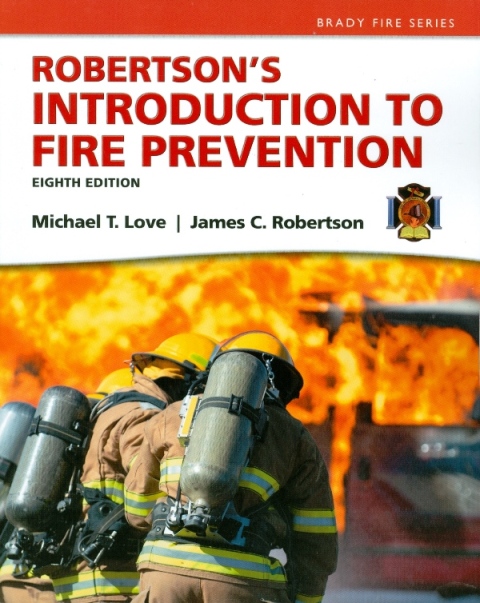
Help Protect Responders by Referencing the Requirements for Organizing and Deploying Safer and More Effective Fire and Emergency Services.
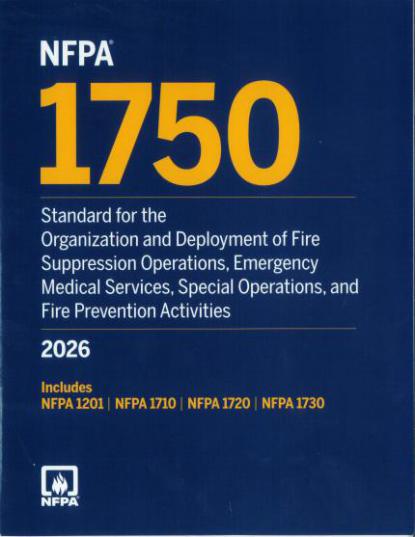
NFPA 1750, Standard for the Organization and Deployment of Fire Suppression Operations, Emergency Medical Services, Special Operations, and Fire Prevention Activities, offers a set of requirements for the organizational aspects of providing fire and emergency services to help protect citizens and responders. The standard covers everything from the criteria for safer, more effective, and efficient all-hazard emergency service operations and developing and implementing an effective community risk reduction plan to improving the health and safety of career and volunteer department personnel.
This document was created to consolidate the following publications into a single standard:
- NFPA 1201, Standard for Providing Fire and Emergency Services to the Public
- NFPA 1710, Standard for the Organization and Deployment of Fire Suppression Operations, Emergency Medical Operations, and Special Operations to the Public by Career Fire Departments
- NFPA 1720, Standard for the Organization and Deployment of Fire Suppression Operations, Emergency Medical Operations, and Special Operations to the Public by Volunteer Fire Departments
- NFPA 1730, Standard on Organization and Deployment of Fire Prevention Inspection and Code Enforcement, Plan Review, Investigation, and Public Education Operations
The first edition, 2026 NFPA 1750, features many updates related to the consolidation of legacy documents.
For portions of the standard made up of NFPA 1201, changes include:
- Editorial revisions to follow the formatting for the consolidated documents
For portions of the standard made up of NFPA 1710, significant changes include:
- Updated requirements to ensure that staffing is determined using a risk assessment by the AHJ
- Several updated definitions to ensure that there is a clear line when the AHJ is determining whether they operate a career department or a volunteer/combination department
- Updates in determining the level and type of occupancy through a documented and adopted risk assessment process, including the removal of specific types of occupancies (such as single-family dwellings) and updating them to either low-, medium-, or high-hazard occupancies. With this change and updates, the staffing levels were also updated based on the level of hazard for each occupancy.
- Clarification in relation to staffing requirements for how the staffing of quint apparatus is to occur based on the way the apparatus is expected to operate at an incident
- Change from extracting alarm handling requirements from other documents into the standard to pointing to the applicable section of NFPA 1225, Standard for Emergency Services Communications
- Addition of new requirements intended to ensure that mutual aid agreements are contractual in nature and documented and written down, rather than verbal in nature
- Revisions that highlight the importance of a well-established and early implantation of the incident command system, as well as the use of supervisory chief officers and incident safety officers for each incident
For portions of the standard made up of NFPA 1720, notable changes include:
- Updates throughout the document to reflect changes in fire and emergency services
- Added definition for the term active volunteer to assist the AHJ in determining their staffing based on the active members who would response to incidents
- New definition for the term exposures, as the term is frequently used throughout the standard, but was previously not defined
- Updated turnout time requirement from 90 seconds down to 80 seconds
For portions of the standard made up of NFPA 1730, notable changes include:
- Revisions to the scope and duties of the fire prevention organization (FPO), including the addition of Chapter 11, Fire Prevention Organization Administration
- Added requirements for existing occupancies to complement requirements surrounding new construction inspections, since those activities have their own unique hazards and conditions
- Revisions to clarify the specifics of plan review activities, the issuance of certificates of occupancy, as well as mandating internal policies and guidelines to be formally documented
- New annual inspection requirement for critical infrastructure occupancy risk classifications due to the determination that they are of equal or greater risk than high-risk occupancies based on the definition of critical infrastructure (i.e., its loss or disruption having a debilitating impact on the community)
- Update to refer to NFPA 1300, Standard on Community Risk Assessment and Community Risk Reduction Plan Development, where the standard previously included requirements for a community risk assessment