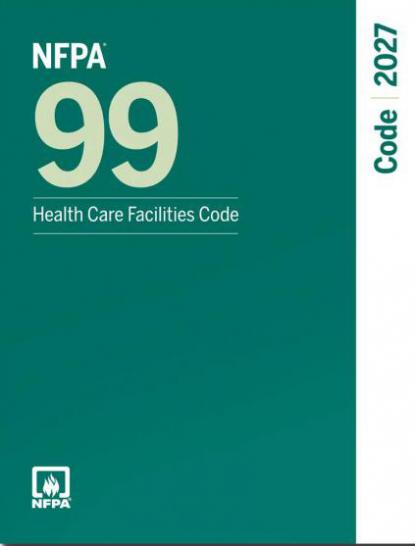
NFPA 99 is an essential resource for professionals responsible for the design, operation, maintenance, and inspection of health care facility systems.
Health care environments present unique safety challenges where infrastructure failures can directly affect patient outcomes. NFPA 99 provides comprehensive, risk-based requirements for electrical systems, medical gas and vacuum systems, telecommunications, plumbing, mechanical systems, and specialized health care equipment.
Updated every three years through a rigorous consensus process, NFPA 99 reflects modern health care facility operations, evolving technologies, and emerging threats such as cybersecurity risks. Using NFPA 99 helps organizations strengthen system reliability, improve compliance with safety regulations, and support safer patient care environments.
Key Features and Benefits of the 2027 Edition of NFPA 99 Include:
- Major Updates to System Requirements: Chapter 5 revisions relocate operational requirements into a dedicated operations subsection, consolidate electrical requirements for motor-driven sources, update piping material requirements, improve inspection and testing provisions, recognize ASSE 6060 credentialing for the responsible facility authority, and require medical gas system diagrams.
- Clarified Scope for Medical Gas and Vacuum Systems: The code no longer mandates the installation of any gas or vacuum system, a decision now determined by the health care facility’s governing body based on risk and operational needs.
- Expanded Electrical System Safety Provisions: Chapter 6 now requires electrical systems to be designed to mitigate risks from fire, explosions, shock, thermal hazards, and natural disasters. Updates also include new life safety branch load requirements for high-rise health care facilities, expanded testing criteria for all on-site power sources, and the addition of emergency responder radio communications systems (ERRCs) to life safety branch loads.
- Reorganized Infrastructure Requirements for Health Care Facilities: Chapters covering telecommunications, plumbing, mechanical systems, dental systems, and hyperbaric facilities have been updated and reorganized to align with risk category approaches used throughout the code.
- New Cybersecurity and Operational Safety Requirements: A new Chapter 17 addresses cybersecurity risks affecting health care facility systems. Additional updates include vendor and contractor security management planning, new requirements for medical gas cylinder storage cabinets, updates to hyperbaric chamber provisions, and references to NFPA 915 for remote inspections of fire protection systems.